Construction delivery + design-build
Ground-up buildings, additions, renovations, and tenant improvements. Commercial interiors, building alterations, and facility upgrades.
Construction + design-build
PRM performs construction for new buildings, additions, renovations, and tenant improvements. Design, permitting, procurement, site management, trade execution, quality control, and closeout are connected through one project team, supported by NbotaiOS.
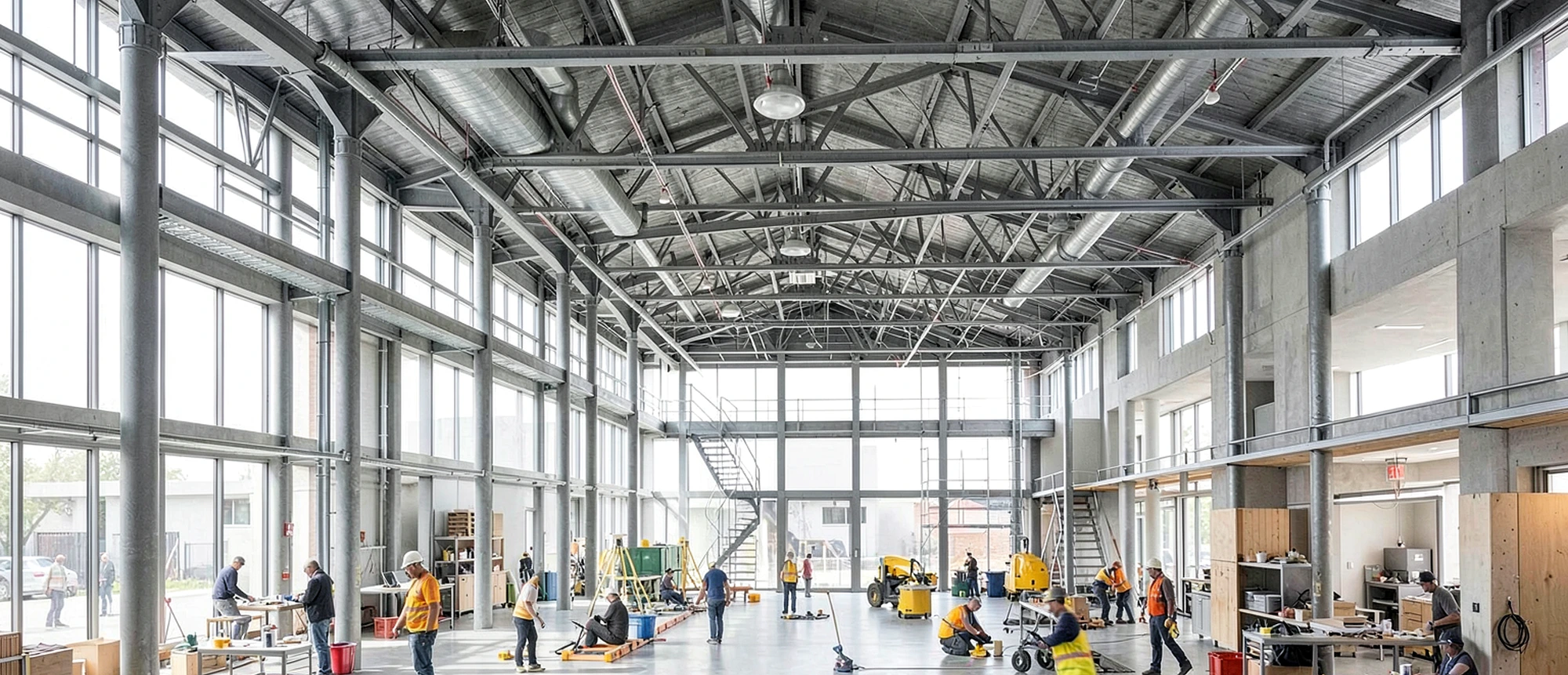
PRM carries projects from the drawing set into completed construction.
What PRM brings
Ground-up buildings, additions, renovations, and tenant improvements. Commercial interiors, building alterations, and facility upgrades.
Quantity takeoffs, trade pricing, purchasing, and subcontractor scopes. Construction schedules, look-ahead planning, and delivery tracking.
Field supervision, trade scheduling, and daily work coordination. Site preparation, foundations, structural work, and building-envelope interfaces.
PRM provides construction services and integrates the design and building process around the owner's scope, budget, and schedule. Early planning establishes the work to be built, contract responsibilities, construction milestones, and the decisions required before mobilization. Design-build assignments connect architectural and engineering development directly to estimating, procurement, and field execution.
PRM converts the approved scope into executable work packages. The team develops the construction schedule, organizes trade scopes, procures materials and equipment, and plans access, deliveries, temporary facilities, and site logistics. Long-lead items and required submittal approvals are tracked before they affect installation dates.
PRM manages construction activities and the participating trades through the work sequence. Field execution connects site and civil work, foundations and structure, envelope systems, interior construction, and mechanical, electrical, and plumbing installations. Current drawings, approved products, field instructions, and work-area conditions inform each activity.
Renovation work requires careful control of the interface between existing operations and new construction. PRM plans phased work areas, selective demolition, temporary protection, access, shutdowns, and tie-ins with the owner. Unexpected field conditions are documented and resolved with the design team before related work proceeds.
PRM organizes site supervision, safety responsibilities, quality checks, inspections, and progress reporting within its construction scope. Costs, commitments, changes, and schedule effects are tracked together. The owner receives clear records of work completed, decisions needed, and issues affecting the next milestone.
PRM carries the construction scope through inspections, punch-list completion, testing, and turnover. The team organizes closeout information so the owner can operate and maintain the completed project. Agency approvals and occupancy requirements are tracked alongside contractual completion items.
Working relationship
PRM tailors the deliverables, participating disciplines, and level of support to the assignment. Share what is available; the team will identify missing inputs, confirm responsibilities, and define the next useful milestone.
Common questions
Yes. PRM performs construction as well as architecture, engineering, BIM, construction management, construction administration, and permitting. The project agreement defines the construction scope, delivery method, participating trades, schedule, and responsibilities.
Yes. PRM can combine feasibility, design, engineering, permitting, preconstruction, construction, and closeout in an integrated assignment. The team can also join a project at a defined stage after reviewing its current documents and conditions.
Bring the real constraint
Share the location, current documents, target milestone, and the decision that cannot slip.
Start the conversation